I still remember the exact moment in late 2024 when I realized I'd never have to juggle four separate progression bars like a street performer spinning plates on sticks. That December, Epic Games flipped the switch on Fortnite's Battle Pass system, and honestly, looking back from my gaming setup in 2026, it was the best quality-of-life change this metaverse has ever received. The old way felt like trying to knit a sweater while running a marathon—constantly switching threads between LEGO Fortnite, Rocket Racing, Festival, and Battle Royale, hoping none of the loops dropped. Now, it's all one big loom, and every experience point you earn regardless of mode weaves itself into the same fabric of rewards.
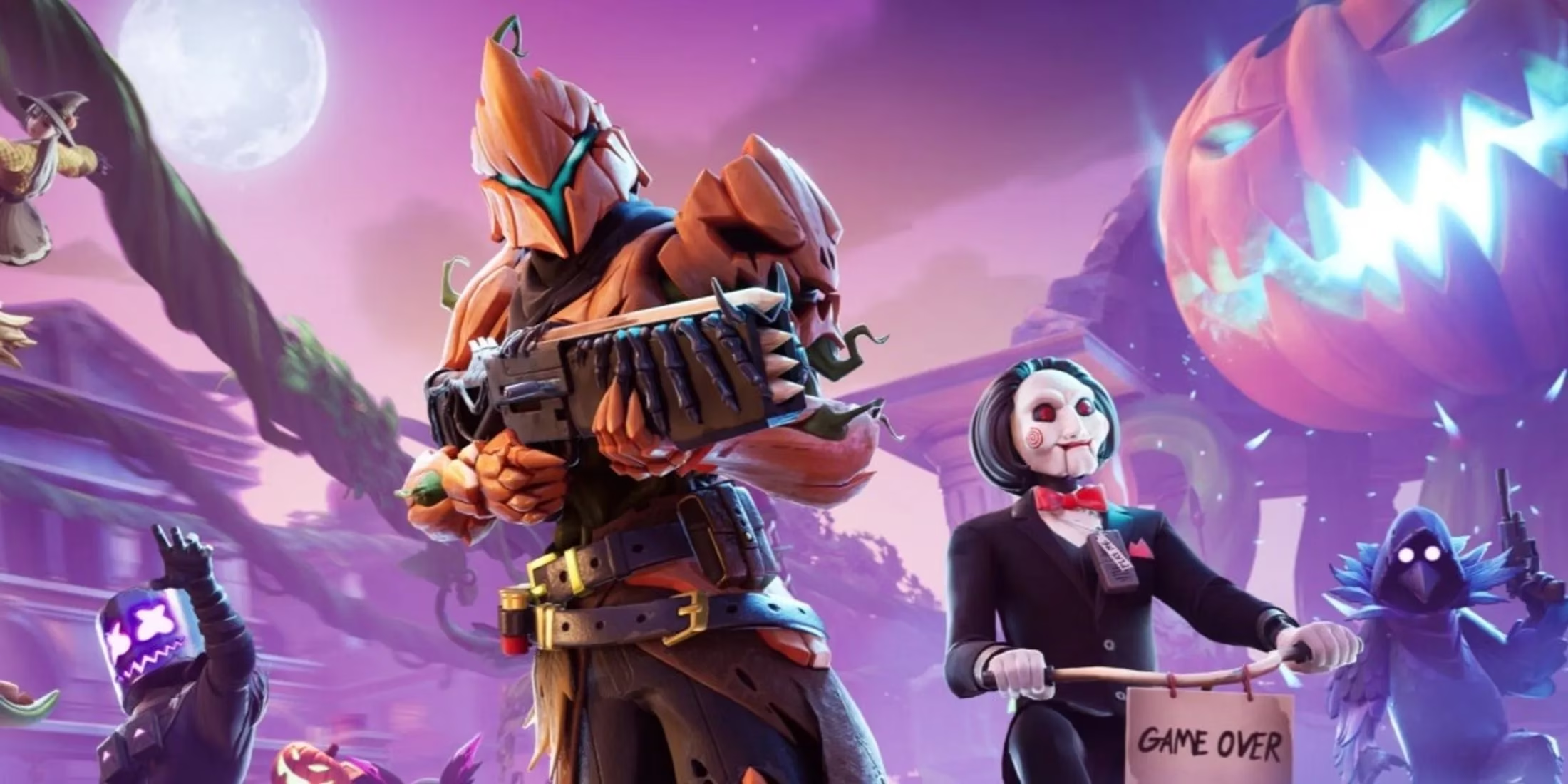
Back on November 2, 2024, Chapter 5 Season 4 wrapped up its Absolute Doom battle pass, and just as we were saying goodbye to Marvel-themed rewards, Epic gave us a glimpse of the future: the Music Pass. Formerly called the Festival Pass, it launched alongside Fortnite Remix Chapter 2, and for the first time, you could earn Music Pass XP in Festival Season 6 while also creeping forward on any other active pass. But the real magic happened on December 1, 2024, when all passes—Battle Royale, LEGO, Music, and the then-new Brick or Treat LEGO Pass—started speaking the same progression language. Every XP drop from any corner of the Fortnite ecosystem fed into a single, unified system, like tributaries pouring into the same massive river.
Fast forward to 2026, and this river has become an ocean. I no longer feel punished for spending a weekend building elaborate cities in LEGO Fortnite with my nephew; those hours aren't "wasted" on a separate pass that I'd have to grind independently. Instead, they push forward every reward track I own. The Music Pass, which now runs seasonal rhythms from artists as varied as synthetic pop duos and classic rock legends, moves up in lockstep. If you've ever watched a master chef work a kitchen where every ingredient arrives pre-portioned and timed to perfection, that's what the current battle pass experience feels like—chaos resolved into harmony.
🌊 The Great Unification
The heart of the change remains the same three core tenets that debuted in the 2024 overhaul:
| Feature | What Changed (Dec 2024) | State in 2026 |
|---|---|---|
| Cross-mode XP | All modes contribute to all active passes simultaneously | Standard; even new experiences like Fortnite Creative 2.0 expansions feed the same pool |
| Reward tracks | Music & LEGO Passes shifted to one free + one premium track | All passes now follow this dual-track model, with auto-claim on by default |
| Purchase flexibility | Direct reward purchases replace Festival Points, Battle Stars, and Studs | You can still buy individual rewards or grab the all-in-one Premium Pass bundle that Epic once teased, now a permanent fixture |
I'll never forget when they retired Festival Points on November 2, 2024, followed by Battle Stars and Studs on December 1. It felt like throwing away a set of mismatched keys and finally being handed a universal remote. That direct purchase option for rewards—rather than buying levels—was a philosophical shift. You could actually target the one skin or emote you wanted without wading through a swamp of filler items. By 2026, this idea has blossomed: the battle pass interface looks more like a curated boutique than a loot box conveyor belt.
🎵 The Music Pass: From Side Act to Center Stage
When the Music Pass first dropped in November 2024, many players treated it as an afterthought—just a rebranded Festival track. But by 2026, it has become one of my favorite parts of the ecosystem. Each season now brings exclusive jam tracks, instruments, and skins that bleed into Battle Royale emotes and lobby music. Because the XP flows freely between modes, I often start my evenings in Fortnite Festival, warming up my fingers on a virtual guitar, then carry that progress straight into a squads match without losing a beat. It's the musical equivalent of a double bass pedal that syncs your whole kit.
🧱 The LEGO Pass and the Democracy of Fun
Epic's decision to apply the new progression system to the Brick or Treat LEGO Pass from December 1, 2024 onward was the real proof of concept. I remember all the skepticism: "Will they really let LEGO enthusiasts earn Battle Royale rewards whilst building castles?" Yes, and in 2026 that promise has only deepened. The LEGO Pass now exists as a permanent sidecar, and I've claimed some of my favorite gliders and harvesting tools while never firing a single shot in a BR lobby. The game finally respects that different players find flow in different activities, and it rewards that diversity with a single, unified progression pulse.
💡 Why This Still Matters in 2026
Some upgrades age poorly, like a phone that was once fast but now collects digital dust. Fortnite’s 2024 battle pass overhaul is the opposite—it’s a classic car that runs smoother with every passing year. In a gaming landscape where live-service titles often fracture their audiences across progression silos, Fortnite’s ecosystem feels like a rare example of convergent evolution. The constant stream of collaborations—from Porsche to Disney’s Cars, as leaks teased before Chapter 6 Remix—now lands in a system where earning those crossover rewards feels effortless.
The auto-claim feature they added back then has become my trusted autopilot. I no longer hover over the battle pass screen like a hawk deciding which page to unlock; the system just doles out the goods as they become available in free and premium tracks. And Epic’s tease about “an easy way to purchase all premium passes at once” has matured into a simple one-click bundle that I eagerly renew each season.
Looking back, the moment Epic Games announced that all passes would progress simultaneously by earning XP from any mode starting December 1, 2024, it felt like the company finally understood that time is the ultimate currency. By 2026, the grind has become a graceful glide. That’s not just a design victory—it’s a philosophical one. The game now treats my playtime as a single story, not a collection of disconnected side quests. And for someone who has been sailing these digital seas since Chapter 1, that sense of cohesion is as refreshing as the first sip of a Slurp Juice after a Victory Royale.