In the grand theater of Fortnite, where a llama pinata can be a financial decision and a skin can cost more than a modest dinner, Epic Games once did something that felt like rearranging the furniture during a house fire. Back in 2024, with the v29.20 patch, the developer quietly stripped rarity colors from cosmetics in both the Locker and the Item Shop. The community noticed. Oh, how they noticed. By 2026, the colors are still gone, and the debate has settled into a low, suspicious hum—like a refrigerator that occasionally makes a noise you can’t quite diagnose.
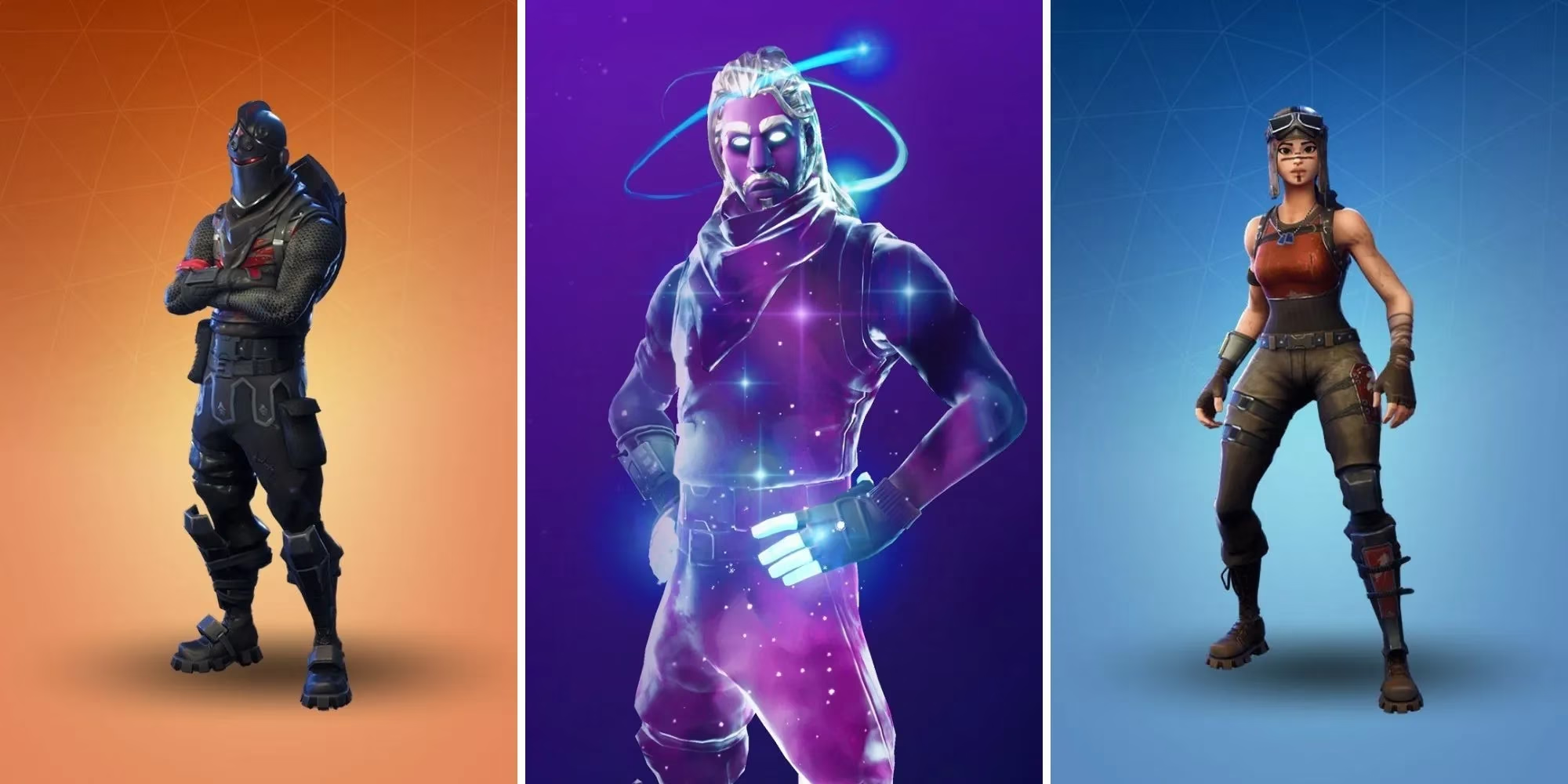
Epic’s official explanation was straightforward. In a blog post, the studio said it was “retiring the old Battle Royale-inspired system of colors and tags for cosmetic quality,” citing the ongoing evolution of the Item Shop. Translation: the shop was growing up, and rarity colors were apparently the training wheels. Epic also insisted the change “doesn’t change [their] approach or the way [they] price things.” That statement landed about as gracefully as a Victory Royale celebration in a squad of one.
The same blog post did include a genuinely welcome tweak. Starting in late May 2024, Epic began adding the planned rotation date for individual items to their description pages. Players could finally see exactly how long a given skin, emote, or pickaxe would remain in the Item Shop before vanishing into the vault. It was a transparency win—a small, shiny pebble of good faith. Unfortunately, that pebble was immediately buried under an avalanche of outrage about the missing rarity colors.
The Community’s Response: A Masterclass in Suspicion
Fortnite fans are not a shy bunch. On X (formerly Twitter), content creator Pizo called the change “not the end of the world,” but argued that Epic Games had “completely lost their credibility” when it came to pricing. Another player, Rezztro, said the update was part of a longer pattern “ruining the magic this game once had,” adding that Epic kept making changes that were “absolutely not needed.” The vibes were, to put it mildly, spicy.
Then came the Avatar: The Last Airbender collaboration. It arrived in the Item Shop with a price tag that made players squint, especially when compared to the recent Invincible bundle. That bundle, players pointed out, included more cosmetic items and cost less. Pairing an expensive crossover with the removal of rarity colors created a perfect storm of suspicion. The community’s logic was simple: if Epic removes the visual shorthand for value, and then charges more for a bundle that feels less valuable, maybe the rarity change wasn’t just about aesthetics.
| Bundle | Cosmetic Count (Player Perception) | Price (Player Perception) | Community Mood |
|---|---|---|---|
| Avatar: The Last Airbender | Felt light for the price | Felt high | 😤 Confused and annoyed |
| Invincible | Felt generous | Felt cheaper | 😊 Used as a comparison weapon |
To be fair, Epic never said rarity colors dictated price. Rarity was always a loose label, not a legal contract. But in the messy marketplace of player trust, perception is reality. Removing rarity colors was like a magician removing the labels from a deck of cards and insisting the ace is still the ace. Technically true. Practically suspicious.
Why Rarity Colors Mattered More Than Epic Admitted
Rarity colors were never just decoration. They were a fast, visual language. A purple item screamed “this is probably going to cost more” before a player even tapped the preview. A legendary skin carried a whiff of prestige, even if the actual model was just a guy in a slightly shinier hat. By removing that language, Epic made the Item Shop more uniform—and, intentionally or not, more opaque.
Players could still compare prices manually, of course. But manual comparison is work. It’s the difference between reading a menu with prices and reading a menu where every dish is described as “market price.” The shop timer helped with rotation anxiety, but it didn’t replace the missing value cues.

The 2026 Aftermath: Old Wounds, New Skins
Fast-forward to 2026. Fortnite is still Fortnite. The Item Shop still rotates, the crossovers still arrive with alarming regularity, and rarity colors remain absent from the Locker and Shop. The rotation timer that Epic introduced in 2024 is now a standard part of the shopping experience—useful, expected, and utterly incapable of erasing the original controversy. The Avatar bundle has long since rotated out, replaced by whatever multiverse mashup currently has players reaching for their V-Bucks. But the lesson lingers.
Epic may have been sincere. The studio might have genuinely believed that rarity colors were outdated clutter. But the rollout felt like a restaurant erasing prices from the menu and promising the bill will be fair. Even if the food is good, diners start counting their coins. In 2026, the Fortnite community still counts. They count items, they count prices, and they count the number of times Epic insists a change is purely cosmetic.
The rarity color removal didn’t destroy Fortnite. It didn’t even destroy the Item Shop. But it did crack something more valuable than any legendary skin: the assumption that Epic and its players were speaking the same language. Trust, like a llama pinata, is easier to break than to refill. And in the ever-rotating aisle of digital cosmetics, that’s a lesson worth more than a few colors.