As the boundary between gaming and metaverses continues to dissolve like a sugar cube in hot coffee, the conversation around which pop culture icons get to pick up a weapon has become remarkably nuanced. By 2026, Fortnite stands as a dazzling digital kaleidoscope where Goku, Ariana Grande, and Master Chief can all share the same lobby, but not every face in the crowd is handed the same toolset. The most carefully guarded participants? Disney’s pantheon of cherished characters.
In 2024, Disney dropped a $1.5 billion investment into Epic Games with the aim of crafting a “new persistent universe” — a move that sent ripples through the industry. Two years later, the fruits of that partnership are visible in a wave of themed experiences, cosmetics, and narrative events, but the weapon mechanics remain a precise moral barometer. Epic Games Executive Vice President Saxs Persson clarified the philosophy during Unreal Fest 2024, and his words still anchor every licensing decision made today.
“Not every outfit will be able to do everything,” Persson explained at the time. “A [Lego] minifig doesn’t hold a gun. Brands should be able to enforce the brand guidelines to the degree that they’re comfortable with that brand being associated with particular ratings.” That statement has since become the Rosetta Stone for decoding which new arrivals can wield firearms and which ones arrive with their hands permanently empty.
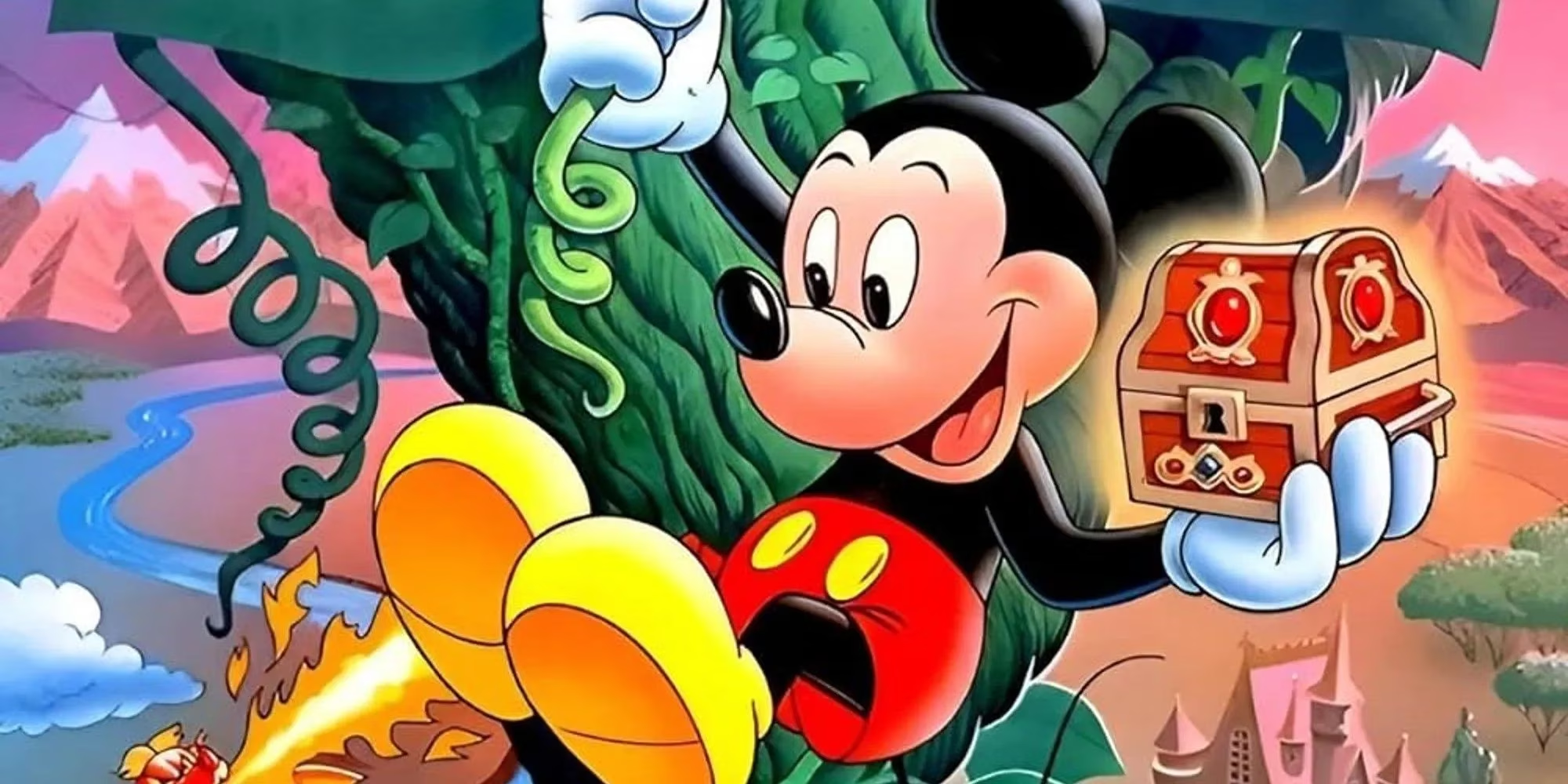
The most famous example remains Mickey Mouse himself. Depicted through decades as the smiling ambassador of wholesome entertainment, Mickey is treated as an E-for-everyone asset, not a teen or mature one. He can dance, he can build, he can probably even drive a rocket-powered shopping cart, but firing a shotgun is off the table. The same protective logic extends to figures from franchises like Toy Story, Winnie the Pooh, and classic princess films — a gentle but firm line drawn in the sand, like a movie rating stamped onto a digital soul.
Yet the situation is not a simple binary switch. Disney’s library is a sprawling ecosystem, and some properties sit on a more permissive branch. The Incredibles, for example, arrived in Fortnite earlier than expected and quickly demonstrated that superhero violence passes the brand check. Mr. Incredible and Elastigirl can enter the fray with all the standard arsenal, because their story already operates in a world of stylized combat. The same nuance applies to characters from Star Wars and the Marvel Cinematic Universe, where blasters and repulsors are narrative staples rather than departures from tone.
This creates a fascinating internal taxonomy. Think of it as a thermostat attached to every intellectual property: some brands are dialed to a cool, safe temperature where anything sharper than a water balloon is forbidden, while others run hot enough to accommodate full battle-royale chaos. The thermostat isn’t controlled by Epic alone; the IP holder — in this case Disney — sets the target range. As Persson noted, “Some IPs are not teen IPs or mature IPs. They are E for everyone IPs.”
By 2026, the boundaries have only become more defined. A new winter update brought Olaf from Frozen onto the island, and true to expectations, he can emote, toss snowballs in a designated frosty LTM, but never pick up a standard rifle. Similarly, a lineup of Disney villains — Maleficent, Jafar, Dr. Facilier — was introduced with special “malice” abilities that replace projectile weapons entirely, a creative workaround that satisfies the need for competitive engagement without shattering brand guidelines.
Meanwhile, crossovers that don’t come from family-centric vaults face fewer hurdles. Characters from adult animation, horror franchises, and certain action films continue to lock and load without a second thought. The contrast is sharp: one patch might deliver a bloodthirsty xenomorph alongside a pacifist cartoon mouse, coexisting in a shared space but operating under very different rules of engagement.
This tiered approach isn’t just about avoiding controversy; it’s a strategic pillar for the metaverse Epic and Disney are building together. By giving brands a volume knob for violence, Epic lowers the barrier for collaboration. The result is a richer, more diverse universe where players can shift from a reaper’s scythe to a mime’s invisible box in a single session. In 2026, the experience feels less like a battle royale with cameos and more like a sprawling theme park where different wings enforce their own guidelines — quiet zones next to thrill rides.
Ultimately, the unfolding rules reflect a simple truth: in a metaverse where anything is possible, the most powerful tool isn’t a gun. It’s the license agreement that decides who gets to hold one.