When I drop into a mythology-themed battle royale, my brain becomes a crow with a jewelry obsession: every glint of gold turns into a possible prize, and every temple doorway feels like a promise. That is exactly how Fortnite Chapter 5 Season 2: Myths & Mortals felt to me. The season introduced Olympus and Underworld chests, rare golden containers tucked inside four mythic hot zones. From my 2026 vantage point, these chests are no longer part of the live battle royale rotation, so I treat this guide as a time capsule and a practical memory aid for archived matches, creative recreations, and Fortnite history conversations. Even so, the lesson they taught me remains sharp: location knowledge is a weapon before the first shot is fired.
Where I Found the Golden Trouble
If I wanted one of these shiny new chests, I had to commit to one of the four new locations. These were Mount Olympus, Brawler’s Battleground, The Underworld, and Grim Gate. Each spot promised enhanced loot, special powers, boss medallions, and mythic weapons, which also meant each spot was a magnet for every player who wanted the same advantages. I learned to treat these POIs less like quiet museums and more like a honey pot with a wasp nest attached.
| Location | What I Remember | Risk Level |
|---|---|---|
| 🏛️ Mount Olympus | Marble grandeur, open sightlines, and constant third-party pressure | High |
| ⚔️ Brawler’s Battleground | A combat-minded landmark that invited early skirmishes | Medium to high |
| 🔥 The Underworld | Dark, tense, and full of players hunting mythic power | High |
| 🚪 Grim Gate | A grim doorway into dangerous loot runs | High |
Once I landed, my job was simple: start hunting for those beautiful golden chests. Simple, not safe. In practice, I moved through each location like a water strider on a hot skillet, checking corners, listening for footsteps, and refusing to stand still after opening a chest.
What Comes Out of an Olympus or Underworld Chest?
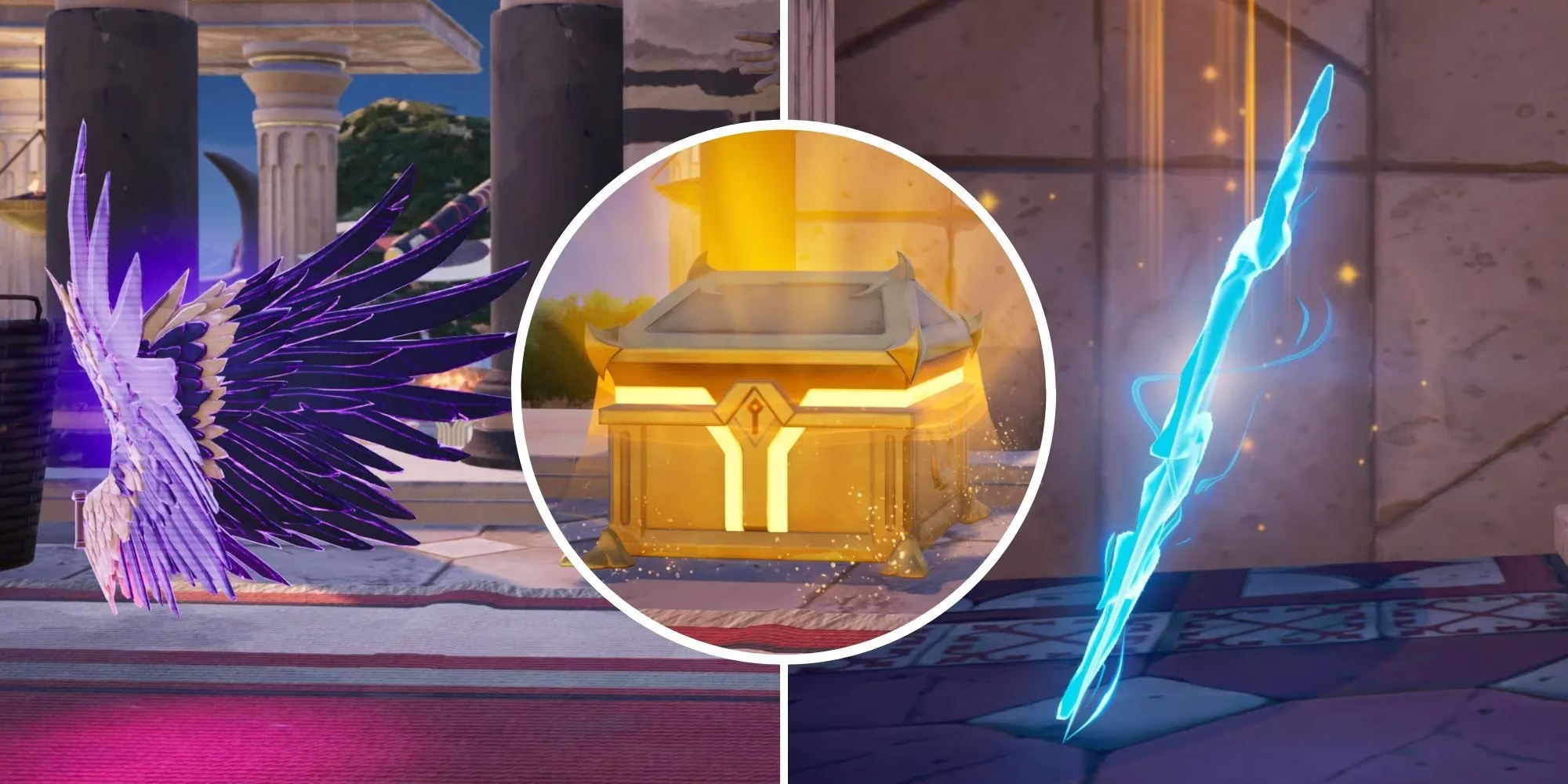
Olympus and Underworld chests often dropped incredible loot. For starters, I could usually find either the Thunderbolt of Zeus or the Wings of Icarus. Aside from those mythic rewards, I could expect a gun of Epic rarity, some shields, and gold for my efforts. Opening one felt like cracking open a gilded oyster and finding a pearl with a taser inside: beautiful, valuable, and capable of shocking the whole lobby.
That loot profile made these chests especially valuable in the early stages of a match. A mythic item plus an Epic weapon and shields could turn a shaky landing into a confident push. In my experience, landing on one of these chests almost guaranteed success in the opening minutes, provided I did not celebrate too loudly and invite half the island to my position.
My Practical Looting Rhythm
I never treated these chests as a casual detour. My routine was to pick one mythic location, land near the edge of the POI rather than in the middle of a crowd, and secure a quick escape route before opening anything. I checked for other players first, opened the chest second, and decided whether to fight or rotate third. The chest was the prize, but the route was the real advantage.
Here is the rhythm I used:
-
🎯 Choose one of the four mythic locations and land with purpose.
-
👀 Clear one angle before committing to a chest.
-
⚡ Open the chest and identify the mythic drop immediately.
-
🛡️ Grab shields and gold without over-looting.
-
🏃 Rotate before the POI collapses into a crossfire.
What This Means for a 2026 Player
In 2026, I would not tell anyone to expect Olympus and Underworld chests in the current live rotation. Fortnite has moved through many seasons since Chapter 5 Season 2, and the map has changed. But for players revisiting old footage, building creative maps, or comparing modern loot design with earlier experiments, these chests remain a fascinating example of how Fortnite turned map knowledge into a mythic treasure hunt. They were rare, they were risky, and they rewarded players who treated a golden chest like a promise and a warning at the same time.",
"language": "en